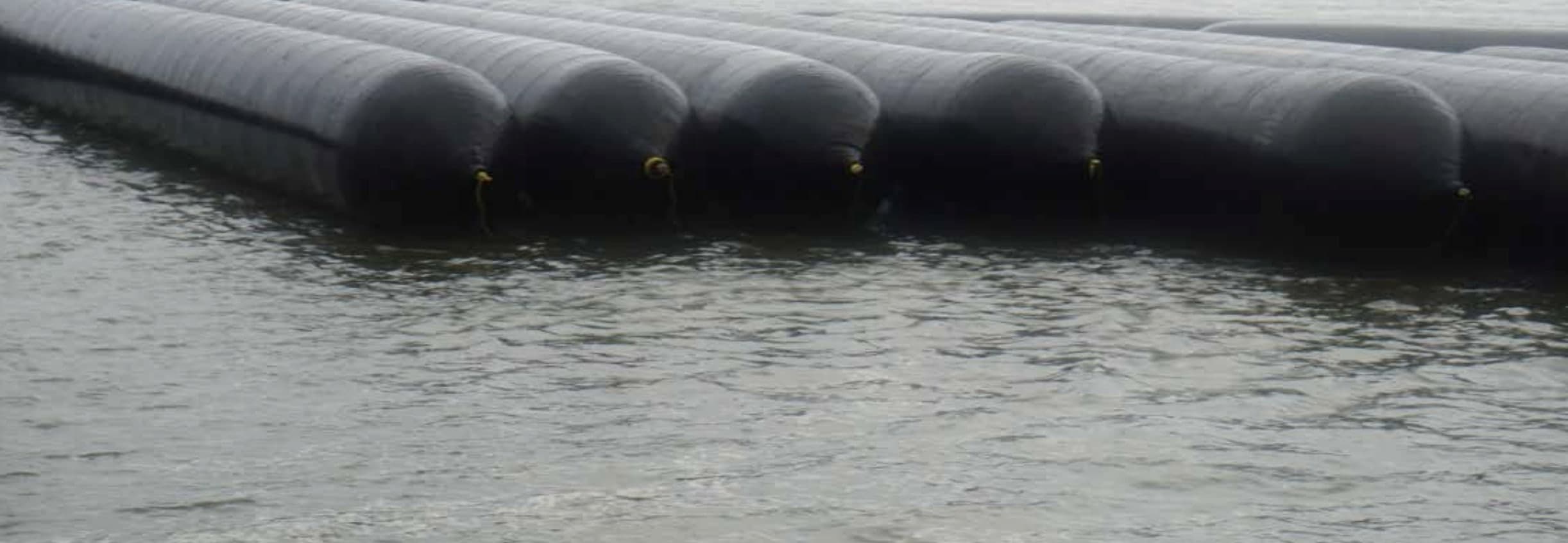
Ship Launching Airbags
ISO 14409 rubber airbags that roll and float vessels off the slipway
Overview
A ship launching airbag is an inflatable cylinder built from raw rubber and multiple layers of nylon-cord reinforcement, closed off by tapered point-ends and fitted with an air inlet valve. Inflated under a hull, a row of airbags acts as a bed of rolling bearings: the vessel rides on air instead of on a fixed cradle.
Because the bags roll, they remove the need for a purpose-built slipway or dry dock — which makes airbag launching one of the most versatile and lowest-capital ways to move a vessel between land and water. It is used by shipyards across Asia, Europe and North America and is frequently the first choice for small- to medium-sized vessels.
How it works
The airbags are laid in rows beneath the hull along the slipway centreline and inflated to a working pressure calculated from the vessel's weight and the contact length available. As they inflate, the hull lifts clear of its keel blocks.
Controlled, progressive deflation then lets the hull roll seaward on the airbags until it reaches buoyancy and floats free — a soft, gradual launch. Run in reverse, the same method hauls a vessel out of the water for survey or repair.
Why it's used
- No fixed slipway or dry dock required
- Low capital cost and fast mobilisation
- Suits almost any hull shape, including sharp-hulled tugs
- Reusable across many launch and haul-out cycles
- Field-repairable — minor leaks can be patched and re-vulcanised
Airbags are graded by the number of reinforcement layers — more layers carry more load and add durability for repeated ship-repair use. Sizing (quantity and working pressure) is always calculated per vessel to ISO 14409, keeping a wide margin between working and bursting pressure.
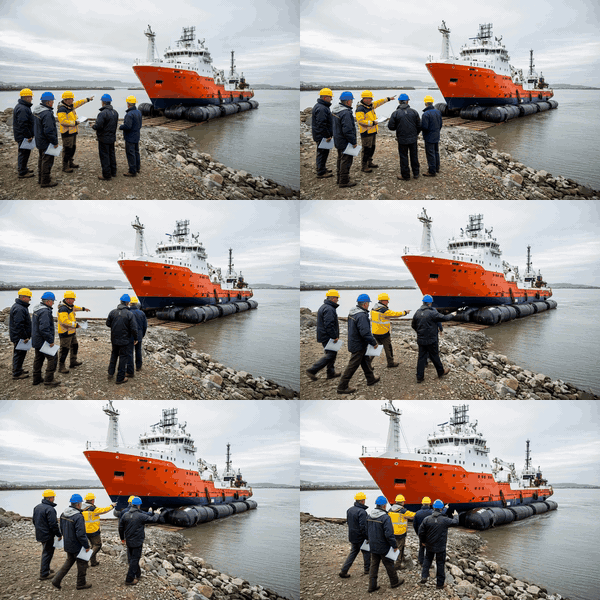
An AI-reimagined ship launch on marine rubber airbags — the real thing, minus the mud.
Typical applications
- General cargo vessels
- Barges & pontoons
- Chemical tankers (under ~10,000 t)
- Anchor-handling tug supply (AHTS) vessels
- Tug boats & small-to-medium craft
- Floating docks, caissons & heavy structures
Need this sized for a vessel?
Send the vessel data and get the relevant specification and standards back.
Start an enquiryQuestions & answers
How does Ship Launching Airbags work?
The airbags are laid in rows beneath the hull along the slipway centreline and inflated to a working pressure calculated from the vessel's weight and the contact length available. As they inflate, the hull lifts clear of its keel blocks. Controlled, progressive deflation then lets the hull roll seaward on the airbags until it reaches buoyancy and floats free — a soft, gradual launch. Run in reverse, the same method hauls a vessel out of the water for survey or repair.
Where are Ship Launching Airbags used?
General cargo vessels, Barges & pontoons, Chemical tankers (under ~10,000 t), Anchor-handling tug supply (AHTS) vessels, Tug boats & small-to-medium craft, Floating docks, caissons & heavy structures
Which standards apply to Ship Launching Airbags?
Manufactured and evaluated to ISO 14409, CCS, Bureau Veritas
More equipment
Imagery & technical data referenced from max-groups.com